candygoogy

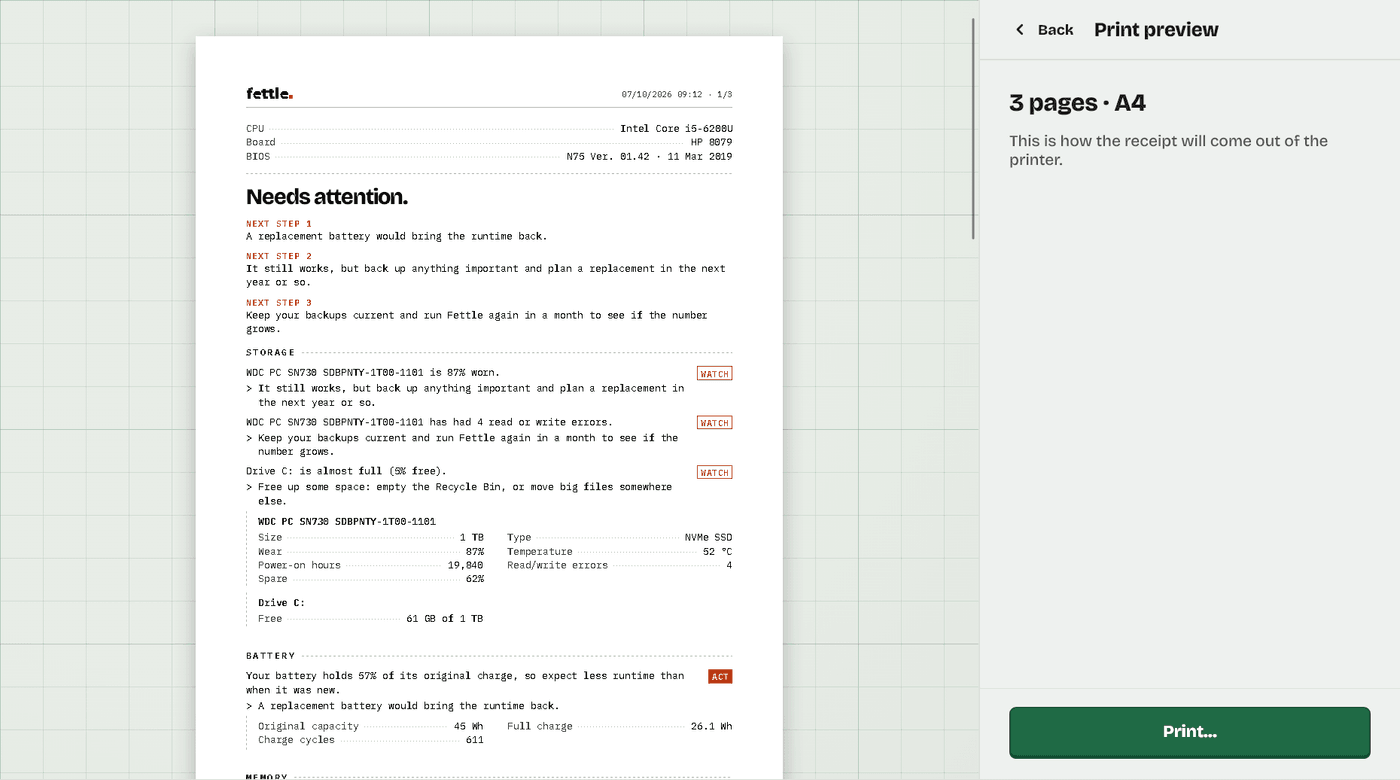
A free, open-source check-up for Windows PCs. It reads what Windows already knows and prints it as a receipt: a plain-words verdict on every line, the next steps at the top, and the numbers underneath for anyone who wants them.

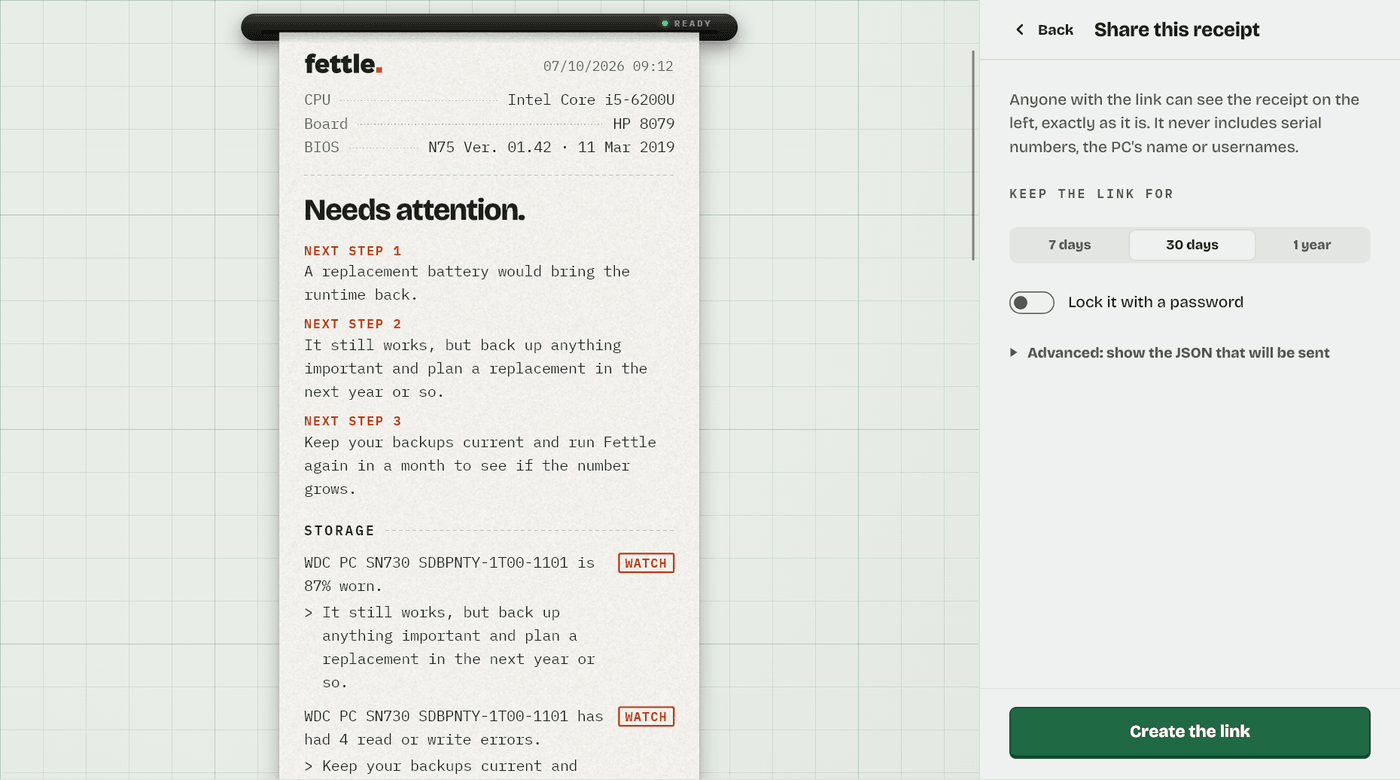
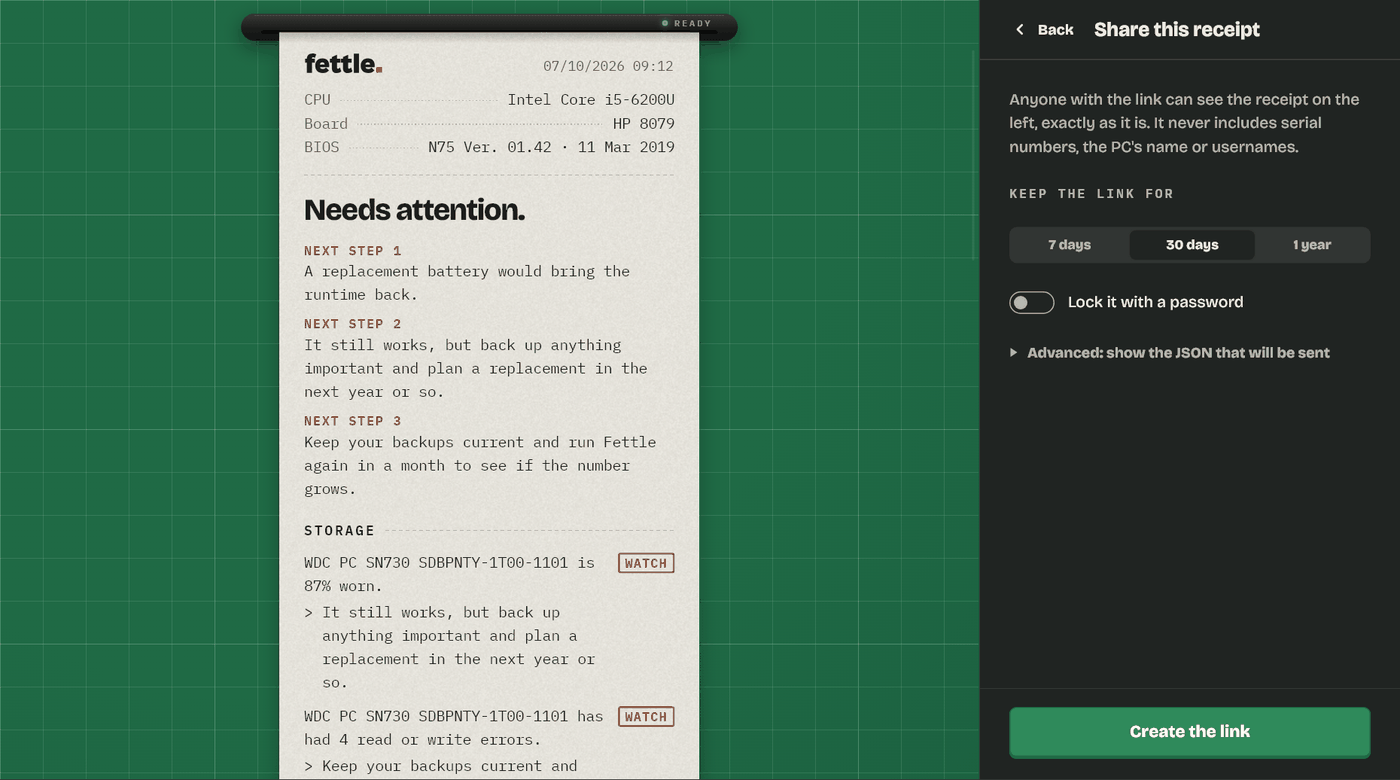
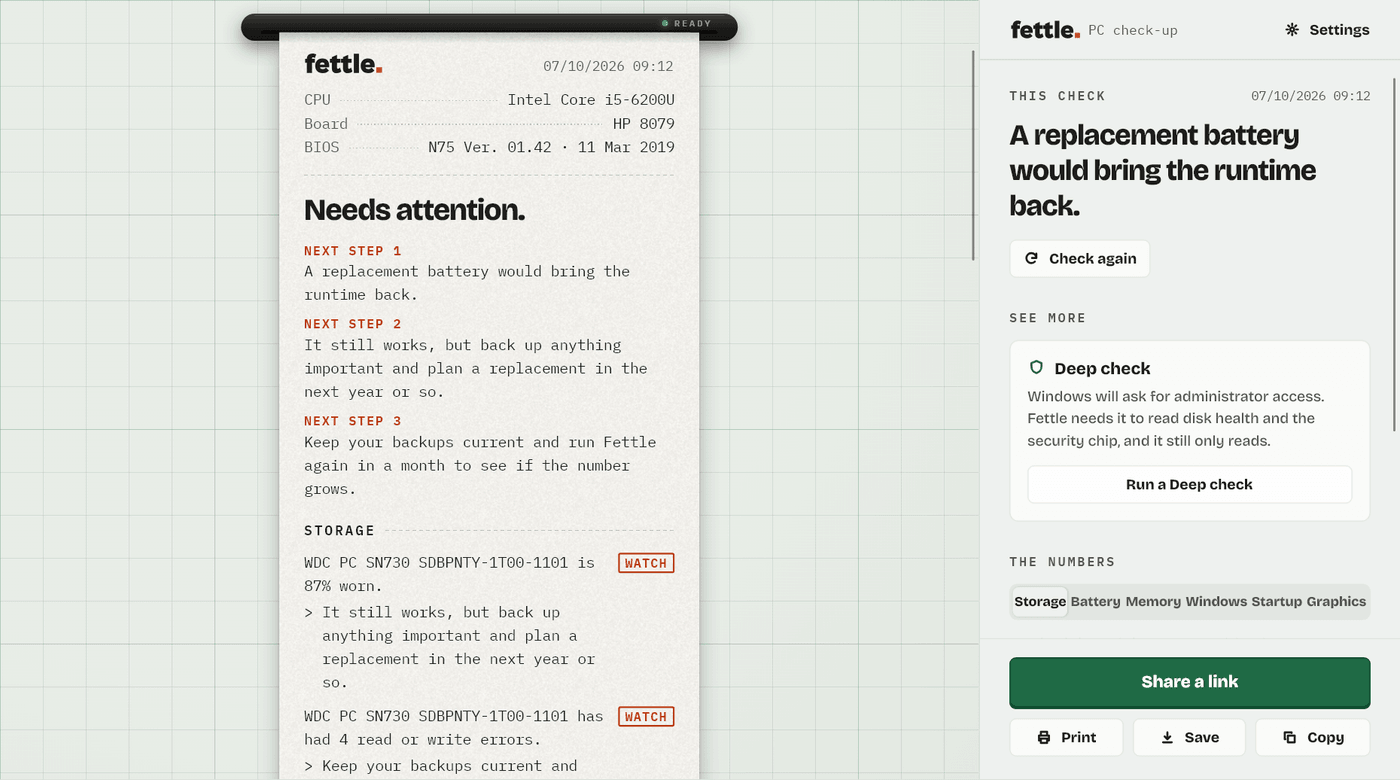
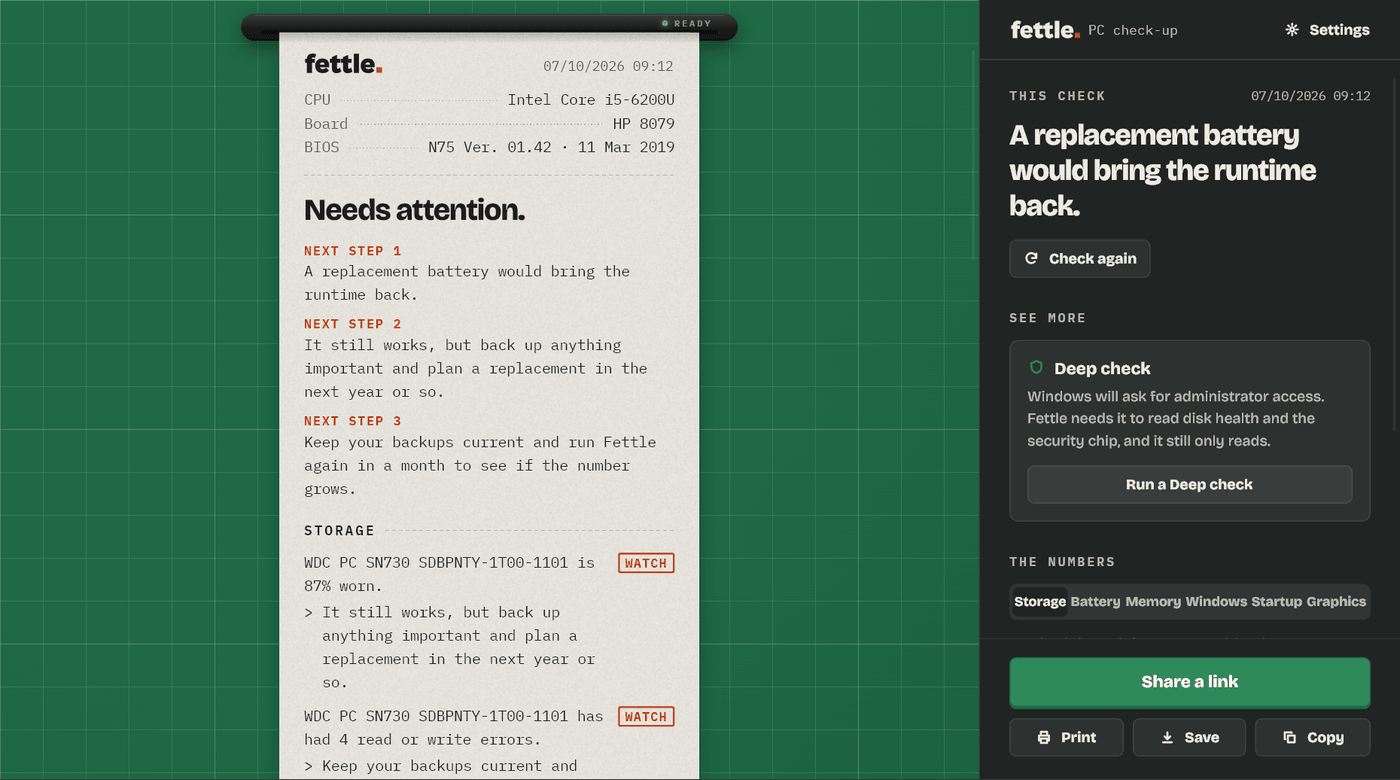
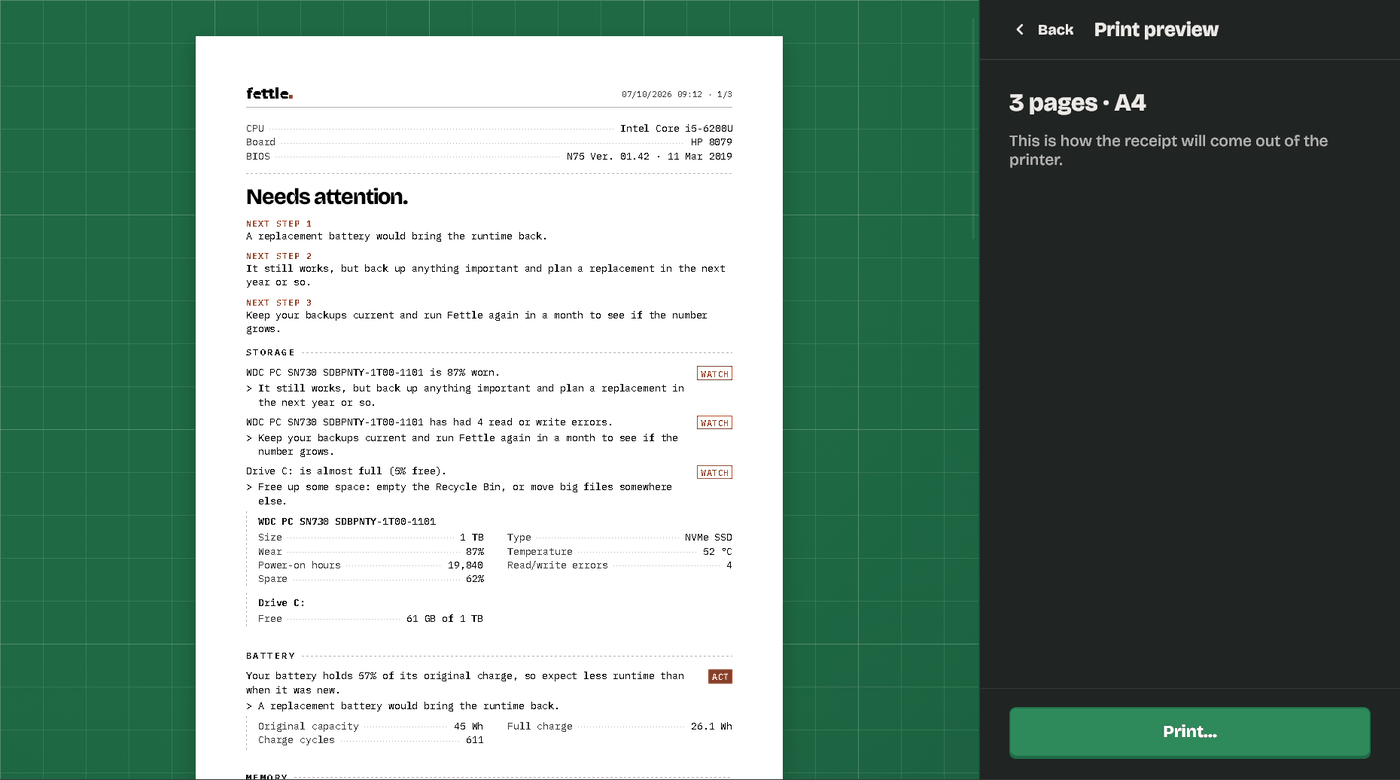
Fettle’s window. On the left, a receipt for an older laptop that says Needs attention, with three next steps and a storage line marked Watch. On the right, the main verdict, a Deep check offer and the Share, Print, Save and Copy buttons.Fettle’s window. On the left, a receipt for an older laptop that says Needs attention, with three next steps and a storage line marked Watch. On the right, the main verdict, a Deep check offer and the Share, Print, Save and Copy buttons.

Why

Most people can’t tell whether their PC is healthy. The tools that could tell them show raw numbers for people who already know what they mean. Fettle reads the same data and says what it means: verdicts first, numbers second.

What was hard

Reading disk and TPM health without administrator rights, and making sense of SSD wear values that every maker reports differently. Partway through, I replaced the Tauri desktop app with a native Slint one, and swapped the website’s TypeScript engine for the same Rust code compiled to WebAssembly, checked against the old one on 405 test cases in English and Italian.

What it won’t do

It only reads. It doesn’t clean, “boost” or change anything, and it sends nothing on its own except an update check you can turn off.
Status
Live, version 1.0.3
Built with
Rust, Slint, WebAssembly, Astro, Cloudflare Workers
Runs on
Windows 10 and 11 (64-bit)
License
MIT
Links

What it checks

If Fettle couldn’t check something, the receipt says so, and says why.

What you can do with the receipt

Privacy

Reports leave out serial numbers, the PC’s name, your username, name and email address, the work or school domain, network addresses and the names of servers on your network. Product keys are never read.

A share link uploads the report behind the receipt you see, with those details taken out, and only when you ask. It’s stored in Cloudflare’s EU data centers, expires when you choose, can have a password (stored only as a hash), and can be deleted with a private link.

Fettle sends nothing else on its own except an update check, which you can turn off. Its website uses no cookies, no analytics and no third-party requests.

What I learned

That a rewrite isn’t finished until it gives the same answers as the code it replaces: running the new Rust engine against the old TypeScript one on 405 test cases is what let me make the switch.

That hardware rarely says the same thing twice: every SSD maker reports wear its own way, so each one has to be read on its own terms.

And that a plain verdict is harder to write than a table of numbers, because it has to be right for someone who can’t check it.

Get Fettle

A free, open-source check-up for Windows PCs.

Back to all work